
Travel Behavior Forecasts by Continent: Europe, Americas, Asia, Africa & Pacific (2025 Insights + 2026 Outlook)
Introduction
Global travel has nearly returned to pre-pandemic levels, with some regions already exceeding them by 2024 and mid-2025. Yet the story is far from uniform: Europe, Africa, and the Middle East have surged ahead, while Asia & the Pacific still trail their 2019 highs. COVID-19 changed traveler expectations permanently, reshaping how people plan, spend, and choose destinations.
What’s driving this shift? Sustainability, flexibility, and technology are now at the heart of travel decisions. From AI-powered itinerary planning to carbon-neutral flights and the rise of “bleisure” travel, the industry is evolving beyond recovery into reinvention.
This article takes a deep dive into travel behavior forecasts by continent, using the latest UNWTO data, industry surveys, and regional insights to understand where we stand in 2025—and what 2026 may look like. You’ll find key trends, growth hotspots, and actionable insights for destinations, businesses, and travelers preparing for the next era of tourism. By analyzing travel behavior forecasts by continent, we aim to uncover patterns that will shape global tourism strategies in the years ahead.
Sustainable travel in the 21st century – Life | Travel | Save

🌍 Global snapshot: where we are now
🌍 Europe: steady growth with a value mindset
- Europeans are favoring shorter, more frequent trips within the region.
- Value-driven behavior dominates: travelers prioritize off-season deals and local authenticity.
- Cultural and sporting events fuel spikes in demand.
🌍 Americas: short breaks and experience travel
- U.S. and Canadian travelers continue to spend heavily on experiences.
- Short trips (1–4 nights) remain the top choice.
- Latin America emphasizes family, nature, and sustainable experiences.
🌍 Asia & the Pacific: recovery with gaps
- Intra-Asia travel is surging, aided by improved connectivity.
- Premium spending is rising in some markets (wellness, luxury).
- Budget travelers continue to fuel backpacker and adventure circuits.
🌍 Africa: rising fast with sustainable appeal
- Travelers seek conservation-linked, smaller-group experiences.
- Off-peak and lesser-known destinations are growing in popularity.
- Receipts and arrivals are up double digits in 2025.
🌍 Middle East: continued boom
- The Middle East has surged well past 2019 levels, thanks to connectivity improvements, mega-events, and investment in luxury tourism.
- Hub cities like Dubai and Riyadh continue to attract stopovers and business.
- Luxury and MICE (Meetings, Incentives, Conferences, Exhibitions) tourism is booming.
Forecast for 2026: Middle East projected at ~120 million arrivals (+20% vs. 2019), making it the fastest-growing region in relative terms.

How COVID-19 has changed travel for good
- Flexibility & insurance: Travelers demand cancellable bookings and stronger health/security assurances.
- Domestic/regional preference: Many still choose shorter, closer trips due to cost and convenience.
- Bleisure growth: More people combine work and travel.
- Overtourism concerns: Travelers actively avoid crowded peaks and seek authentic alternatives.
Forecast table by continent (2026)
| Continent/Region | 2024 Arrivals (M) | 2025 Est. Growth | 2025 Arrivals (Est. M) | 2026 Forecast (M) | 2026 vs 2019 |
| Europe | 745 | 4 % | 774 | 820 | 5 % |
| Asia & Pacific | 255 | 11 % | 283 | 210 | -3 % |
| Americas | 220 | 5 % | 231 | 245 | 2 % |
| Africa | 75 | 12 % | 84 | 92 | 10 % |
| Middle East | 105 | 7 % | 112 | 120 | 20 % |
2026 Outlook: Travel Behavior Forecasts by Continent
- CWT/GBTA Forecast 2026: Business travel costs will stabilize after volatility. Link to the article.
- TravelPulse: Expect consistent annual global tourism growth of 6–9% through 2026. Link to the article.
- EY Observatory 2025: Demand will hold steady; sustainable and authentic experiences will drive choices. Link to the published research report.
Emerging Trends Shaping Global Travel
As global tourism stabilizes post-pandemic, several transformative trends are redefining how people plan, book, and experience travel. These shifts are central to travel behavior forecasts by continent, as each region adapts differently to new realities:
1. Technology-Driven Personalization
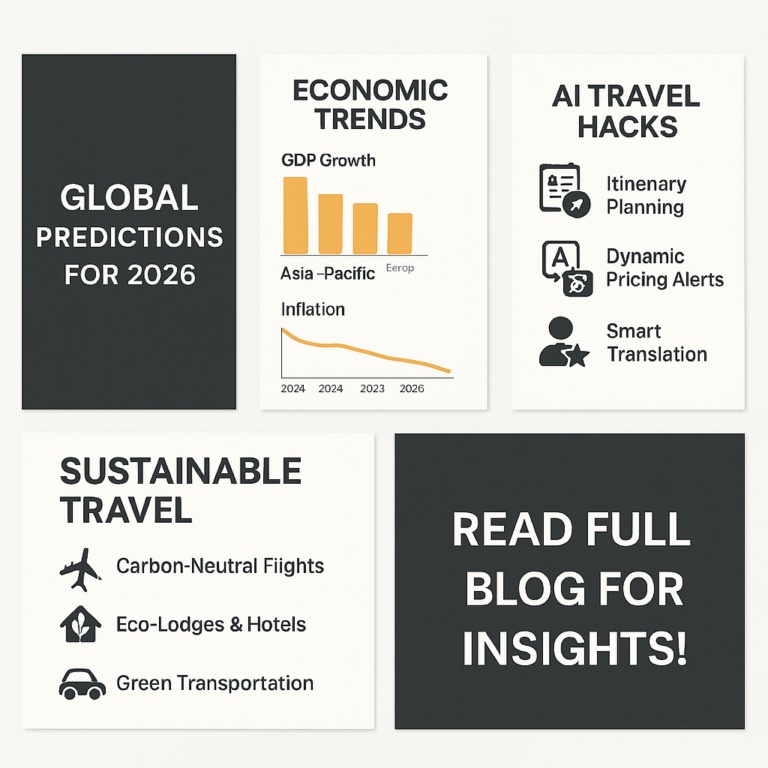
AI-powered tools now curate itineraries, optimize pricing, and enhance customer service. Contactless check-ins, biometric security, and virtual assistants are becoming standard, streamlining the traveler journey.
2. Sustainability as a Core Value
Travelers increasingly seek eco-friendly accommodations, carbon-neutral flights, and conservation-linked experiences. Destinations promoting green initiatives and authentic local engagement gain a competitive edge.
3. Experience Over Possessions
Wellness retreats, culinary tours, and cultural immersion dominate demand. Adventure and “slow travel” (longer stays, fewer destinations) reflect a shift toward meaningful experiences.
4. Economic & Geopolitical Influences
Currency fluctuations, inflation, and visa policy changes impact destination choices. Geopolitical stability remains a key factor for recovery in certain regions.
5. Bleisure and Hybrid Work
The rise of remote work fuels extended stays and combined business-leisure trips. MICE tourism (Meetings, Incentives, Conferences, Exhibitions) is booming in hub cities.
6. Risk Management & Flexibility
Travelers demand flexible bookings, robust insurance, and health security assurances. These expectations, shaped by COVID-19, are now permanent and reflected in travel behavior forecasts by continent, influencing how destinations and businesses plan for the future.

Conclusion
This post has been enhanced using AI for text improvement.
Recent Posts
- How Much Does a Week in Tokyo Cost in 2027?
- Holyone B Pyhätunturi review 2026
- Autumn travel in Finland vs Japan? Why Autumn Might Be the Best Time to Visit Both in the 21st Century
- Free Travel eSIM for International Travel: Is It Really Worth It in 2026?
- Summer Trip To Pyhä-Luosto National Park: Reindeer, Hiking and the Beauty of Finnish Lapland in the 21st Century




Hi, how have you been lately?
Hi, I’m doing fine thank you. Hope you enjoyed my blog post 🙂